Why Is Everyone Obsessed With Japanese Stationery? The Rise of a Global Stationery Culture
Affiliate Disclosure: This site contains affiliate links. If you make a purchase through these links, we may earn a commission at no extra cost to you.
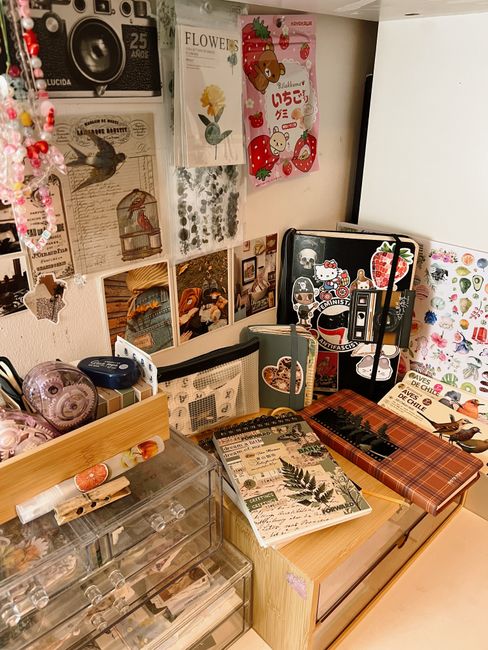
- Social media virality — #stationery has over 12 billion TikTok views, fueled by ASMR unboxings, pen tests, and aesthetic desk content.
- Exceptional craftsmanship via monozukuri — Japanese makers obsess over continuous improvement, marginal gains, and quality control.
- The Hobonichi Techo effect — a daily planner built around Tomoe River paper and a passionate global community has become a cultural touchstone.
- A collectible hobby with daily utility — limited editions, completionism, and the desk-setup trend make stationery both beautiful and functional.
The Hobonichi Techo Phenomenon
If one product captures the global obsession with Japanese stationery, it’s the Hobonichi Techo. Launched in 2005 by Japanese internet company Hobonichi (led by writer and entrepreneur Shigesato Itoi), the Techo started as a niche product for a Japanese audience. Today it’s a global brand with a following so devoted that Bloomberg ran a feature on it.
The original Hobonichi Techo is deceptively simple: a daily planner the size of a paperback, bound in a soft cover and packed with a year’s worth of daily pages. What makes it special is the paper — ultra-thin Tomoe River paper, which lets the book hold 365-plus pages while staying slim enough to carry everywhere. The paper is famous for being fountain-pen-friendly while keeping a satisfying tactile feel.
But the Hobonichi isn’t just a planner. It’s a system.
The Techo comes with dozens of cover options, from simple nylon to hand-embroidered Japanese textiles. There are accessories: stencils, ruler bookmarks, pencil boards, sticky notes, and clear covers. There are multiple sizes: the original A6, the larger Cousin (A5), the slim Weeks (horizontal weekly layout), and the new Day-Free (undated). Users build their Hobonichi kit over years, layering covers, accessories, and inserts.
What Bloomberg’s coverage highlighted was the unusual devotion of the Hobonichi community.
Users post their daily spreads on Instagram. They create elaborate decorations on their pages. They swap tips on which pens work best on Tomoe River paper. The Hobonichi website publishes “Techo Days” interviews with fans from around the world.
The brand has built genuine, organic community loyalty. It’s the kind of thing marketers dream about.
The Hobonichi phenomenon shows a key truth about Japanese stationery: when you combine exceptional materials with thoughtful design and build a community around the product, you’re not selling a planner anymore. You’re selling a daily ritual.
The Philosophy of Monozukuri
To understand why Japanese stationery is different, you need to understand monozukuri (“ものづくり”). The term translates literally to “making things,” but in Japanese business culture it carries a much deeper meaning. Monozukuri is the philosophy of craftsmanship: the pride, care, and continuous improvement that goes into manufacturing.
It’s why a $5 Japanese pen writes better than a $5 pen from almost anywhere else. I think that’s the real secret behind the whole industry.
Monozukuri shows up in stationery in specific ways:
- Kaizen (continuous improvement): Japanese stationery products are never finished. The Pilot G2 has been refined year after year since its launch. The Uni Kuru Toga has been through multiple generations, each improving the lead rotation mechanism. Tomoe River paper has been reformulated to reduce ghosting. Nobody says “good enough” — it’s always “better than last year.”
- Attention to marginal gains: The Zebra Sarasa Clip has a spring-loaded clip that doesn’t rattle. The Kokuyo Campus notebook has micro-perforated pages that tear out cleanly. The Pentel Orenz has a guided lead sleeve that prevents snapping. These are tiny features, but they add up to a much better user experience.
- Material obsession: Midori spent years developing MD paper to get the perfect balance of smoothness, feedback, and ink performance. Sailor formulates its own ink with proprietary nano-pigment technology. Tombow developed a proprietary eraser compound that erases cleanly without smudging or crumbling.
- Quality control: A Japanese factory’s approach to quality is fundamentally different from a Western factory’s. Instead of inspecting products at the end and rejecting defects, Japanese manufacturing emphasizes process control — building quality into every step. The result is fewer defects and more consistent products.
The Real-World Impact
Monozukuri isn’t just a manufacturing philosophy. It’s a cultural value. Japanese consumers expect quality, and Japanese companies compete on quality. That competition drives an upward spiral where every brand has to refine its products to keep up. The result is a stationery market unlike any other in the world.
The “Aesthetic Desk Setup” Trend
Walk into any university library or co-working space in 2026, and you’ll see them: carefully curated desk setups with Japanese stationery front and center. A Zebra Sarasa Grand in matte black. A Midori MD notebook open to a half-finished page. A Kokuyo pencil board. A glass jar filled with Mildliner highlighters arranged by color. A brass pencil sharpener. A leather pen case.
The “aesthetic desk setup” trend, which exploded on TikTok and Instagram during the pandemic, has become a defining look of the 2020s. It has its own visual grammar: warm lighting, muted color palettes (especially beige, cream, sage green, and warm brown), natural materials (wood, leather, brass), and a curated-but-not-cluttered layout. The aesthetic draws heavily from Japanese design principles: minimalism, intentionality, and the beauty of everyday objects.
Japanese stationery fits this trend perfectly. Few products photograph as well as a neatly arranged collection of Tombow Dual Brush Pens or a stack of Kokuyo Campus notebooks with their clean, geometric covers. These products are designed to be seen and appreciated, not hidden away in drawers.
The trend has fueled huge growth in premium desk accessories. Pen stands from brands like Hightide (their brass BOTTLE pen holder is an Instagram staple), pencil cases from Lihit Lab and Delfonics, desk organizers from Muji and Kokuyo — these have become essential elements of the aesthetic desk. The stationery isn’t just for writing anymore. It’s for decorating.
The Planner & Journaling Community
If you’ve never encountered the planner community, the devotion can be surprising. There are people who spend hours each week decorating their Hobonichi Techo or Jibun Techo with washi tape, stickers, stamps, drawings, and calligraphy.
There are subreddits with hundreds of thousands of members dedicated to specific planner brands. There are YouTube channels that do nothing but planner setup videos. There are stores that exist solely to sell planner accessories.
The planner community is a testament to how Japanese stationery has turned the act of planning from a chore into a creative practice. The key thing is that Japanese planners are designed to be used, not just to organize. The Hobonichi Techo’s daily page gives you space for reflections, sketches, lists, and memories, not just appointments. The Jibun Techo’s time line lets you map your day and review how you actually spent your time. The Midori Traveler’s Notebook’s modular system lets you carry a daily diary, a work notebook, and a sketchbook all in one cover.
Flip-Throughs & Plan With Me
The community has its own culture. There are “flip-throughs” where users show every page of a completed planner. There are “plan with me” videos that walk through setting up a new week.
There are supply swaps, destashes, and group buys for limited-edition accessories.
The Vocabulary
The enthusiast vocabulary includes terms like “spread,” “dashboard,” “sticker bomb,” “minimalist setup,” and “tomodachi (friend) cover” (a Hobonichi cover exchange).
Journaling has followed a similar path. The bullet journal method, popularized by Ryder Carroll, found a natural home with Japanese stationery. The fine-tipped gel pens and fountain pens that Japan does so well are ideal for the detailed layouts and hand-lettered headers bullet journaling requires. Tombow Dual Brush Pens became the go-to for hand lettering. Midori MD notebooks became the canvas for the minimalist journaling movement.
The planner and journaling community is the emotional core of the Japanese stationery obsession. These aren’t just people who like nice pens. They’re people who have found a creative outlet, a mindfulness practice, and a community through the simple act of writing things down.
How Japanese Stationery Became a Collectible Hobby
Japanese stationery collecting has grown from a niche interest into a full-fledged hobby with its own culture, economics, and social dynamics. Understanding the collector psychology is key to understanding the phenomenon.
Limited Editions and FOMO
Japanese brands have mastered the limited edition. Uni releases seasonal Jetstream collections (spring pastels, autumn earth tones, winter metallics). Sailor drops fountain pens in new colors constantly, some exclusive to single retailers, others to specific cities or events. Hobonichi releases cover collaborations with artists and designers that sell out in hours. Tombow issues “limited set” Dual Brush Pen collections tied to seasonal themes.
Each limited release creates a scarcity signal that triggers the collector impulse. The fear of missing out drives purchases, and the secondary market where sold-out items trade at premium prices validates the collector’s decision to buy now.
The Hunt
Part of the appeal is the search. Finding a rare color of the Uni-ball One or tracking down a Japan-exclusive Pilot Metropolitan has the thrill of a treasure hunt. Online communities share tips on where to find specific items. Discord servers exist just to alert members when limited editions drop. The hunt turns stationery shopping from a passive activity into an active, social pursuit.
Completionism
Once you buy one product in a series, the pull toward completing the set is hard to resist. Zebra’s Mildliner line started with 10 colors and now has over 40. Owning one color feels incomplete. Owning twenty feels like an achievement. The same dynamic applies to Sailor ink lines (the Shikiori series has dozens), Uni Jetstream color families, and Pilot Iroshizuku ink bottles (24 colors, each named after a Japanese natural phenomenon).
Display and Curation
A stationery collection isn’t hidden in a drawer. It’s displayed, photographed, and shared. Pen cases with transparent windows, desk organizers that hold pens upright, and modular shelving units are all designed to turn the collection into a visual statement. How you organize your collection — by color, by brand, by type — becomes a form of personal expression.
Comparison to Other Collecting Hobbies
Japanese stationery collecting sits at an interesting intersection of other collecting behaviors. It shares things with several established hobbies while being distinct from all of them.
Stationery vs. Sneakers
Sneaker collecting and stationery collecting share a surprising amount of DNA. Both involve limited editions, colorway variants, brand loyalty, and a secondary market. The drop culture where limited releases sell out instantly and get resold at a premium is basically the same.
The difference is price. A pair of limited sneakers might cost $200, while limited stationery typically costs $5–$30. Stationery offers the same collector dopamine hit at a much lower price point, which is why it has broader appeal.
Stationery vs. Blind Box Collecting
The comparison to blind boxes (like Pop Mart or Sonny Angels) is revealing. Both hobbies involve collecting sets of desirable objects, displaying them, and sharing collections online.
The key difference is utility: a pen writes, a notebook records ideas, a planner organizes your life. Stationery collecting feels more “justified” because the objects serve a purpose. You can tell yourself (and others) that you need forty gel pens because each one writes differently. And that’s not entirely wrong.
Stationery vs. Watch Collecting
Watch collecting is about precision engineering, brand heritage, and craftsmanship. Japanese stationery collecting hits many of the same notes.
A Sailor fountain pen with a gold nib is a precision instrument with decades of manufacturing heritage behind it. The appreciation for the engineering (how the Kuru Toga mechanism works, how Tomoe River paper is made) is similar. The barrier to entry is vastly lower, which makes stationery the “entry-level precision engineering hobby.”
Stationery vs. Makeup Collecting
There’s a strong parallel to makeup collecting, especially in how brands release seasonal color collections, limited editions, and collaborations. The visual appeal of a rainbow of gel pens recalls the appeal of a palette of eyeshadows.
The unboxing experience, the swatching (or pen-testing), the community reviews — the whole emotional arc is remarkably similar. Both hobbies center on self-expression through curated collections of colorful, functional objects.
What Makes Stationery Unique
What sets stationery apart from all these hobbies is its daily utility. A fountain pen can be used every day for years. A Hobonichi Techo shapes your daily routine. A Kokuyo notebook is where ideas take form.
This daily engagement creates an emotional connection that a blind box figurine or a pair of sneakers in a display case just can’t match. The stationery collector isn’t just acquiring objects — they’re acquiring tools that become part of their daily life.
That’s the real answer to the question everyone’s asking. People are obsessed with Japanese stationery because it sits at a unique intersection: affordable enough to collect, beautiful enough to display, well-made enough to use daily, and culturally rich enough to explore forever. It’s a hobby that rewards both depth and breadth, and it’s only getting bigger.