Best Japanese Stationery for Beginners -- Where to Start & What to Buy First
Affiliate Disclosure: This site contains affiliate links. If you make a purchase through these links, we may earn a commission at no extra cost to you.
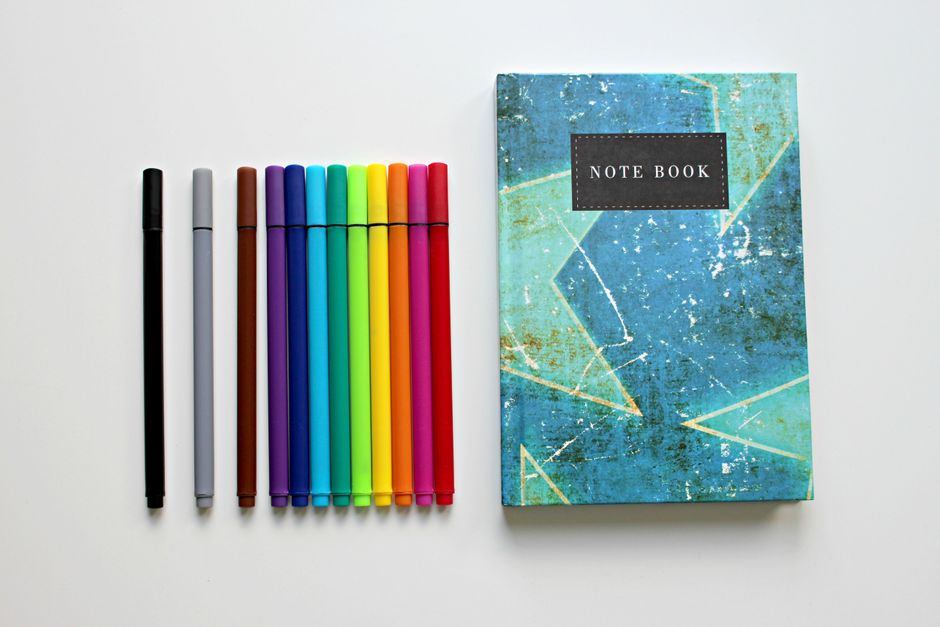
- 5 items, under $100 total
- Platinum Preppy ~$5 - best intro fountain pen
- Uni Kuru Toga ~$7 - innovative mechanical pencil
- Pilot Juice Up or Zebra Sarasa ~$12-18 - great gel pens
- Kokuyo Campus B5 ~$5 - the gold standard notebook
- Hobonichi Weeks ~$30 - world's most loved planner
Japanese stationery has a reputation for being expensive, complicated, and hard to find. In my experience the truth is simpler. A handful of affordable, thoughtfully designed products can change your daily writing experience for under $100. You do not need a $200 fountain pen or a collection of 40 gel pen colors to enjoy the quality Japanese stationery is known for.
This guide is for absolute beginners. I have picked five essential items that deliver the most bang for your beginner buck. Products that will make you understand, immediately, why Japanese stationery has such a passionate following.
Every item costs under $30, and the complete starter set lands well under $100.
The Starter Kit -- 5 Essential Items Every Beginner Should Try
Here is the kit at a glance:
- Platinum Preppy Fountain Pen (~$5) -- The best introduction to fountain pens
- Uni Kuru Toga Mechanical Pencil (~$7) -- A mechanical pencil that is actually innovative
- Pilot Juice Up or Zebra Sarasa Gel Pen Set (~$12–$18) -- The gel pen experience that started it all
- Kokuyo Campus B5 Notebook (~$5) -- The gold standard of affordable Japanese paper
- Hobonichi Weeks Planner (~$30) -- The world's most beloved planner system
Total: ~$59–$65. That leaves plenty of room in a $100 budget for a pen case, some washi tape, or a nicer fountain pen upgrade.
Best Entry-Level Fountain Pen: Platinum Preppy (~$5)
The Platinum Preppy is the most recommended starter fountain pen in the world, and I think for good reason.
It costs about the same as a Starbucks coffee. It writes better than many pens ten times its price. And it has a party trick no other $5 pen can match: a slip-seal cap that prevents ink from drying out for months (even years) between uses.
Most cheap fountain pens dry out quickly because their caps do not seal properly. Leave a Preppy unused for six months, uncap it, and it writes immediately. No priming needed.
This is Platinum's patented technology, and it is the same mechanism used in their $200+ pens. You are getting genuine engineering, not a toy.
Choosing the Right Nib Size
The Preppy comes in three nib sizes: EF (extra fine, 0.2 mm), F (fine, 0.3 mm), and M (medium, 0.5 mm).
For beginners I recommend the Fine (F) nib. It is fine enough for small handwriting and planner grids but smooth enough to feel effortless. The Extra Fine (EF) is excellent if you write in Hobonichi or have very small handwriting. The Medium (M) is smooth but lays down a thicker line that may bleed on cheaper paper.
Cartridges, Converters, and Upgrades
The Preppy comes with one Platinum ink cartridge (black or blue-black). You can also buy a converter (the Platinum CONV-200, ~$5) to use bottled ink, which opens up way more color options and reduces long-term cost.
The pen is made of lightweight plastic and feels a bit flimsy in hand. That is the trade-off for the price. But the writing experience? Genuinely excellent.
Upgrade path: If you love the Preppy, the next step is the Platinum Prefounte (~$12) (the same nib and feed in a sturdier, more attractive body) or the Platinum Plaisir (~$15) which adds an aluminum barrel for a premium feel.
Best Mechanical Pencil: Uni Kuru Toga (~$7)
The Uni Kuru Toga is not just the best mechanical pencil for beginners. I think it is the most innovative mechanical pencil ever made.
The name means "rotate" in Japanese, and that is exactly what it does. A specialized gear mechanism inside the barrel rotates the lead slightly every time you lift the pencil from the page. This keeps the lead tip sharp and uniform at all times.
Why does this matter? Ordinary mechanical pencils develop a flat, chisel-shaped tip as you write. The line width changes from thin to thick depending on the angle of the worn edge. The Kuru Toga solves this completely.
Every stroke is the same width, every time. The result is consistently crisp, clean writing that looks like it came from a fine-tipped pen.
The standard Kuru Toga (model M5-1017 or M5-1012) is the one to buy. It uses 0.5 mm lead, has a comfortable rubber grip, and costs about $7 on Amazon Japan or $10 on JetPens. The mechanism is visible through a translucent window on the barrel, which is oddly satisfying to watch.
It takes standard 0.5 mm lead. I recommend Uni NanoDia 2B lead for a dark, smooth writing experience.
There are also higher-end Kuru Toga models: the Kuru Toga Roulette (~$12) with a metal body and knurled grip, and the Kuru Toga Advance (~$10) with a faster rotation engine. The standard model is plenty for beginners.
Best Gel Pen Set: Pilot Juice Up or Zebra Sarasa Multi-Pack (~$12–$18)
Japanese gel pens are a category unto themselves. The two best entry points are the Pilot Juice Up and the Zebra Sarasa Clip. Both are excellent, but they suit different personalities.
Pilot Juice Up -- The Precision Choice
The Juice Up uses a needle-point tip (0.4 mm is the sweet spot) that writes smoothly at almost any angle.
The ink is pigment-based and water-resistant. It won't fade or run if you spill coffee on your notes. The Juice Up writes fine enough for small grid planners but with enough flow to feel smooth, not scratchy. A 3-pen set (black, blue, red) costs around $12 and covers daily writing. Add a 5-color set (~$18) for more variety.
Zebra Sarasa Clip -- The Color Lover's Pick
The Sarasa Clip comes in over 40 colors, including the wildly popular Vintage series (muted retro shades like sepia black, Bordeaux purple, and antique pink). The spring-loaded clip is satisfying.
The ink is pigment-based and water-resistant. The 0.5 mm tip is a great all-around size. A 5-color Vintage set (~$15) might be the most Instagrammable stationery purchase you ever make. The writing quality backs up the looks.
My recommendation: If you want a precise, no-nonsense daily writer, get the Pilot Juice Up 3-pen set. If you want color variety and aesthetic appeal, get the Zebra Sarasa Vintage 5-pen set. You can't go wrong with either.
Best Notebook: Kokuyo Campus B5 (~$5)
The Kokuyo Campus B5 notebook is the quiet workhorse of Japanese stationery. It is the notebook used by generations of Japanese students. It remains one of the best values in paper: about $5 for 30 sheets (60 pages) of high-quality, fountain-pen-friendly paper.
What Makes Campus Paper Special
What makes Campus paper special is the coating technology Kokuyo developed specifically for fountain pens and gel pens. The paper resists bleed-through, feathering, and show-through better than paper at twice the price. Ink sits on the surface and dries cleanly, with crisp edges and no spread.
A Platinum Preppy with Fine nib writes beautifully on Campus paper. No bleeding, no ghosting.
The Perfect Size and Binding
The B5 size (roughly 7 x 10 inches) hits the sweet spot between A5 portability and A4 desk comfort.
The pages are perforated for clean tearing. The notebook lies flat when open, thanks to Kokuyo's Twist Ring binding. The 6 mm ruled lines are narrower than standard US notebook lines, which naturally encourages more compact, organized writing.
Campus notebooks come in ruled, grid, and blank formats. For beginners I recommend the 6 mm ruled B5. It is the most versatile.
On Amazon Japan, a 5-pack costs about $15. On US stores, individual notebooks run $5-$6 each.
Upgrade path: If you want something more premium, try the Kokuyo Campus High Grade MIO (~$8) (even smoother paper with less show-through) or the Midori MD Notebook (~$15), which uses a toothier, more tactile paper that fountain pen enthusiasts love.
Best Planner: Hobonichi Weeks (~$30)
The Hobonichi Weeks is the perfect planner for beginners and also the perfect planner for experts. Its popularity is not hype. I genuinely think it is the best-designed weekly planner on the market.
A Layout That Fits Any Planning Style
The Hobonichi Weeks uses an A6 slim horizontal format (roughly the size of a passport). The left page shows a full week in vertical columns with hourly breakdowns.
The right page is a blank grid page for notes, lists, or free-form journaling. This layout works equally well for scheduling, habit tracking, memory keeping, and general life organization. It adapts to any planning style.
Tomoe River Paper — Light But Mighty
The paper is Tomoe River (or the equivalent Sanzen TRP). It is whisper-thin yet remarkably strong and fountain-pen-friendly.
A whole year of daily pages weighs almost nothing. You will forget it is in your bag. Despite the thin paper, there is virtually no bleed-through or feathering with most fountain pen inks and gel pens.
The Weeks comes in a huge variety of designs: solid colors, Liberty Fabrics patterns, collaborations with illustrators, and plain covers (which you can decorate yourself).
The soft cover versions start at about $25. The hard cover (avec) is about $30. The planner covers a calendar year (January-December), with new editions released each August/September.
Important for beginners: The Hobonichi Weeks is a date-specific planner. The dates are printed in.
Make sure you buy the correct year. Most US stores (Kinokuniya, JetPens) stock the English-language version. The Japanese version uses the same layout but has Japanese month/day labels.
Budget Breakdown: Complete Starter Set Under $100
Here is exactly what a complete beginner's starter set looks like, including everything you need and a few extras:
| Item | Price | Notes |
|---|---|---|
| Platinum Preppy (F nib) | ~$5 | Comes with one ink cartridge |
| Uni Kuru Toga (0.5 mm) | ~$7 | Add a pack of NanoDia lead (~$3) |
| Pilot Juice Up 3-pen set | ~$12 | Black, blue, red -- all you need |
| Kokuyo Campus B5 notebook | ~$5 | 30 sheets, 6 mm ruled |
| Hobonichi Weeks (current year) | ~$30 | The centerpiece of the kit |
| Subtotal | ~$59 | |
| Extra: KOKUYO Harinacs stapler | ~$6 | No-noise stapler -- surprisingly satisfying |
| Extra: Tombow Mono eraser | ~$2 | Best eraser on the market |
| Extra: Rollbahn or Lihit Lab pen case | ~$12–$18 | To carry your new collection |
| Total with extras | ~$79–$85 | Still under $100! |
Even with all the extras (a pen case, spare lead, a better eraser, NanoDia lead) you are still well under $100. That is the thing about Japanese stationery: the best entry-level products are affordable by design. The expensive stuff comes later, when you know exactly what you want.
Next Steps After the Starter Set
Once you have used the starter set for a month or two, you will have a much clearer sense of what you enjoy. Here are the natural progressions:
- If you loved the fountain pen: Upgrade to a Pilot Metropolitan (~$18) or TWSBI Eco (~$30). The Metropolitan has a brass body that feels significantly more premium than the Preppy. The Eco is a piston-filler that holds a huge amount of ink. Then explore bottled ink: Pilot Iroshizuku (Kon-Peki, Yama-Budo) is the gateway.
- If you loved the gel pens: Expand your color collection. The Zebra Sarasa Clip 40-color lineup is the obvious path. Try the Pilot Juice Up 0.3 mm for ultra-fine writing. Or check out Pentel Energel for the fastest-drying gel ink (game-changing for lefties).
- If you loved the notebook: Try different paper types. The Midori MD Cotton has a soft, toothy feel fountain pen users love. The Life Noble Note uses cream-colored, smooth paper that makes any ink look beautiful. The Hobonichi Techo (Original A6) is the daily companion to the Weeks.
- If you loved the planner: Explore the full Hobonichi line: the Original A6 (page-per-day) for detailed journaling, or the A5 Cousin for even more space. Consider the Jibun Techo from Kokuyo for a more structured, productivity-focused system. Or the Nolty line from Nippon for classic business planner layouts.
Common Mistakes Beginners Make
After years of buying Japanese stationery and talking to hundreds of beginners, here are the mistakes I see most often:
1. Buying too much, too fast
The biggest mistake beginners make is ordering 30 different pens, 10 notebooks, and a $100 fountain pen all at once.
You do not yet know what you like. A Pilot Juice Up and a Zebra Sarasa write very differently. You might strongly prefer one over the other. Start with one of each major category and expand from there.
2. Ignoring paper quality
A $200 fountain pen writes like a $5 pen on bad paper. The paper is at least as important as the pen. Start with good paper (Kokuyo Campus, Midori MD, or Tomoe River) before spending money on expensive pens.
3. Buying from the wrong store
Buying Japanese stationery from a general US drugstore or office supply store almost always means paying 2-3x the price for outdated models. A $5 Pilot G2 at CVS is $2.50 on Amazon Japan. Always compare prices between JetPens, Amazon US, and Amazon Japan before buying.
4. Forgetting about refills
Some Japanese pens use proprietary refills that are hard to find or expensive. Before falling for a pen body, check that refills are readily available and reasonably priced. The Pilot G2, Pentel Energel, and Uni-ball Signo all use widely available standard refills.
5. Overlooking shipping costs
That $3 Platinum Preppy on Amazon Japan costs $10 to ship. For small orders, US-based stores are cheaper. Save Japan-based orders for large hauls where the per-item shipping cost is low.
6. Buying limited editions as your first purchase
Limited-edition pens and planners are beautiful, but they are expensive and often sold out. Buy the standard version first, confirm you actually like the product, then hunt down limited editions if you love it.
7. Not using a pen case
Japanese pens are well-made but not indestructible. A cheap fabric pen case (~$5-$10) will protect your pens from scratches, leaks, and pocket lint. The Lihit Lab Teffa series and Kokuyo Neo Critz are excellent affordable options.
Product Recommendations
Platinum Preppy Fountain Pen (F nib) -- 3-Pack
The king of entry-level fountain pens. Buy a 3-pack (black, blue, red bodies) and keep one in your desk, one in your bag, and one as backup. The slip-seal cap means they will all write perfectly even if you do not touch them for months. At ~$15 for three, this is the best value in fountain pens.
Uni Kuru Toga Standard (0.5 mm) + NanoDia Lead
The mechanical pencil that changes your writing. Pair it with Uni NanoDia 2B lead for the smoothest, darkest writing experience. The rotation mechanism is genuinely life-changing for anyone who writes by hand regularly.
Pilot Juice Up 0.4 mm -- 3-Color Set
The perfect gel pen starter. The 0.4 mm needle-point tip works for both everyday writing and detailed planner work. Water-resistant, pigment-based ink. Black, blue, and red cover 95% of your writing needs.
Kokuyo Campus B5 6 mm Ruled -- 5-Pack
Stock up on the best budget-friendly Japanese notebook paper. A 5-pack on Amazon Japan costs about $15 and will last you months. Fountain-pen-friendly, perforated pages, lays flat. Everything a notebook should be.
Hobonichi Weeks (Current Year Edition)
The perfect beginner planner. Slim enough to carry everywhere, flexible enough to adapt to any planning style, and built around legendary Tomoe River paper that makes every pen look its best. Choose a cover design that speaks to you.
Your Journey Starts Here
The five items in this starter kit are not arbitrary picks. They are the products that seasoned stationery enthusiasts, after decades of experience and thousands of dollars in purchases, consistently agree are the best entry points into Japanese stationery. They are affordable, high-quality, and representative of what makes Japanese stationery special.
Start with this kit, use everything for at least a month, and then explore the areas that excite you most. The world of Japanese stationery is deep and rewarding. Every journey begins with a single pen.